

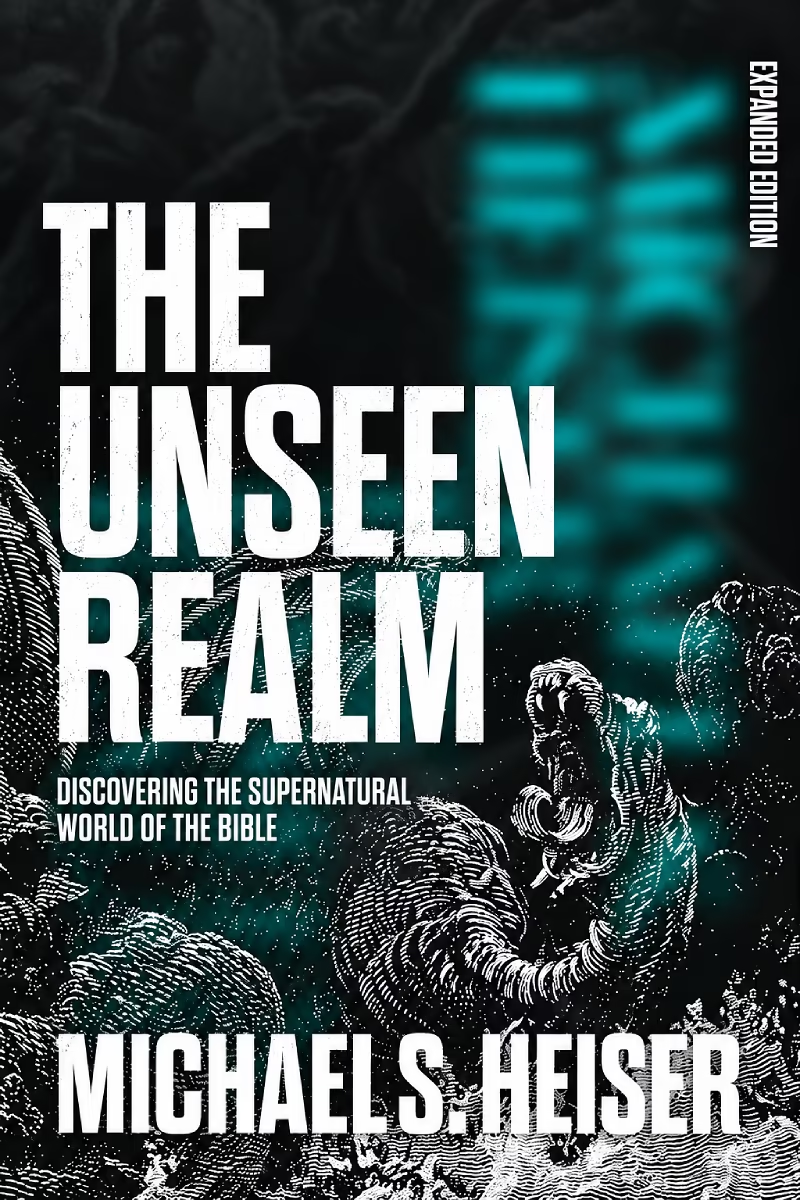
The Unseen Realm
Who are the sons of God, the divine council, and the Nephilim—and why do these passages matter to the story of Jesus? Michael S. Heiser reconstructs Scripture's supernatural worldview, connecting Eden, heavenly rebellion, the nations, Christ's kingdom, and final restoration. This expanded edition adds further material to his account of the Bible's often-overlooked unseen world.
Available Instantly
About This Book
Michael S. Heiser's The Unseen Realm examines the Bible's supernatural worldview through the language, religious environment, and assumptions of its ancient writers. The 2025 expanded edition supplements the original study with further material by Heiser, presented in sidebars and appendices. The book's governing claim is that biblical texts about heavenly beings, divine councils, rebellious spirits, sacred space, and the nations are integral to the unfolding purposes of God and the work of Jesus Christ. Heiser encourages readers to understand these passages within their original ancient Near Eastern and Second Temple contexts and then see how their themes reappear across both Testaments.
A central foundation is the divine council. Psalm 82 depicts God standing in an assembly of elohim, and 1 Kings 22:19–23 portrays a heavenly council scene in which spiritual beings participate in a divine decision. Heiser argues that elohim can designate inhabitants of the unseen realm without making those beings equal to Yahweh. He distinguishes the one uncreated God from other spiritual beings and explores how the divine council relates to God's rule, his heavenly household, and the biblical depiction of an ordered unseen world. Readers puzzled by the 'gods' or 'sons of God' of the Old Testament find these expressions situated within the wider theology of Scripture.
Genesis provides several major turning points in this account. The serpent in Eden represents an intrusion of rebellion into sacred space, where God intended to dwell with humanity. Genesis 6:1–4 raises the question of the sons of God, the daughters of humanity, and the Nephilim; Heiser follows how this episode connects with later traditions about transgressive heavenly beings, imprisoned spirits, and the giants associated with the land's conquest. The material engages Numbers 13:33 and later Old Testament accounts of giant clans, alongside 2 Peter 2 and Jude. His treatment of Genesis 11 and the dispersion at Babel leads to Deuteronomy 32:8–9, where the division of the nations and Yahweh's selection of Israel are crucial to what he calls cosmic geography. He understands spiritual authority associated with the nations as part of the background to the Bible's account of God's people and the restoration of his rule among all peoples.
The divine presence forms another recurring thread. Heiser discusses the garden of Eden, holy mountains, the tabernacle and temple as sacred space, and the relationship between heavenly and earthly households. He examines the visible and invisible manifestations of Yahweh, including the Angel of the LORD and Jacob's language in Genesis 48:15–16. These passages become part of his account of how the Old Testament prepares readers to understand Jesus' identity. The book also explores prophetic participation in the heavenly council and throne-room visions, connecting episodes such as Isaiah 6 and Daniel 7 with the biblical disclosure of God's purposes.
The conquest narratives, the nations, and the coming of the Messiah are not treated as unrelated mysteries. Heiser links Israel's historical vocation and conflicts with the nations to the New Testament announcement of the kingdom of God. The Son of Man imagery of Daniel 7 contributes to his presentation of Christ, while Jesus' ministry, death, resurrection, and exaltation mark a decisive reversal of the powers' hold over the nations. The mission of the church and the spread of the gospel in Acts belong within that reversal. Paul's language of rulers and authorities, including material in Ephesians and Colossians, helps explain why spiritual powers and the worldwide expansion of God's kingdom are connected. The story of God's human family ultimately includes believers' participation in Christ's victory and inheritance.
Heiser closes the arc with the already-present and future kingdom: hostile powers are judged, God's people inherit his purposes, and the distinction between God's heavenly and earthly households moves toward its intended fulfillment. Revelation's final vision, including the renewed creation of Revelation 21–22, is set against the book's earlier discussions of Eden and divine dwelling. The work therefore answers questions such as who the divine council members are, why Genesis mentions Nephilim, how the division of nations relates to spiritual rule, what the Angel of the LORD means, and how these unusual Old Testament passages matter for understanding Jesus. Its special contribution is connecting detailed passages into a coherent supernatural biblical theology, rather than offering a general guide to paranormal experiences or a conventional commentary on a single book of Scripture.
Book Details

Reading Fit
STUDY LEVEL
Advanced, Intermediate
STUDY SCOPE
Entire Bible, New Testament, Old Testament, Topical
BOOKS INCLUDED

Edition & Format
PUBLISHED
October 1, 2025
AVAILABLE FORMATS
paperback, hardcover, kindle, audiobook
LENGTH
561 pages
· 17h 10m audio

Topics Covered
You Might Also Like