

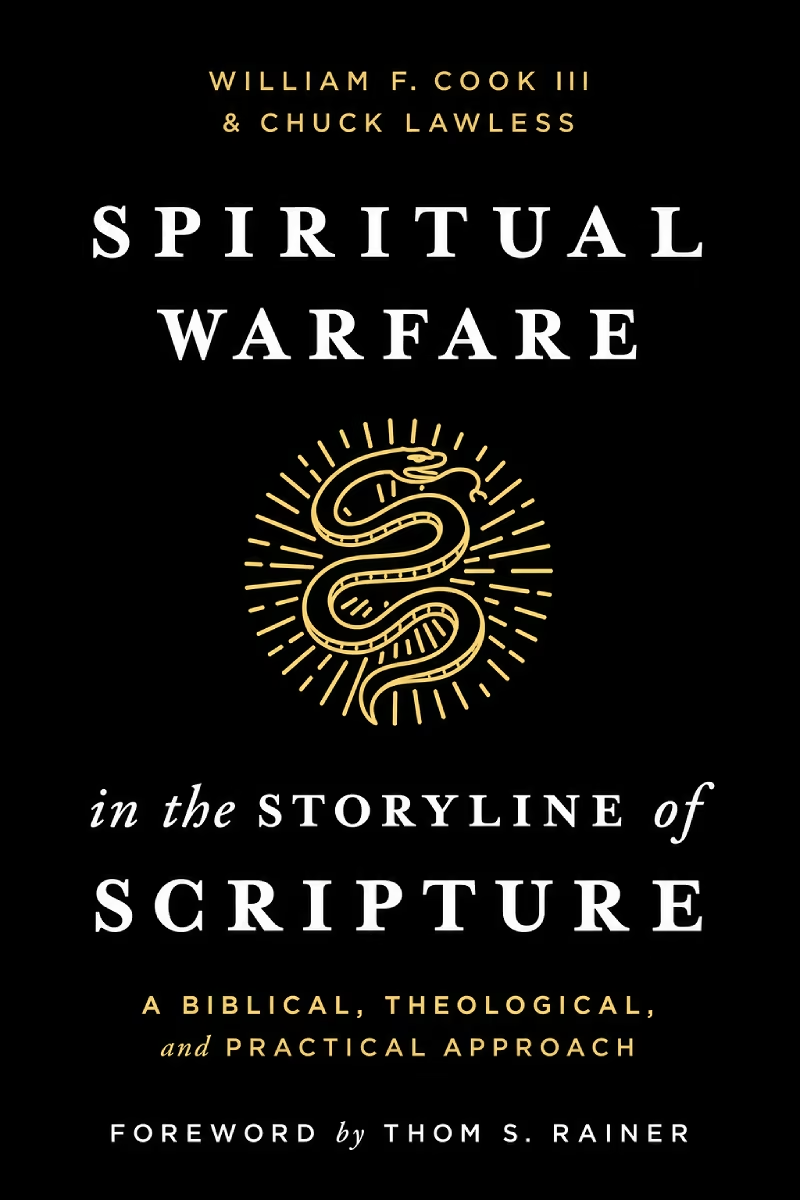
Spiritual Warfare in the Storyline of Scripture: A Biblical, Theological, and Practical Approach
Spiritual warfare is more than a collection of frightening experiences. William F. Cook III and Chuck Lawless follow the Bible’s unfolding account of Satan’s opposition from Genesis to Revelation, then show how that teaching bears on churches, families, evangelism, missions, and Christian leadership. Their focus is on standing firm in a battle Christ has already won.
Available Instantly
About This Book
Spiritual Warfare in the Storyline of Scripture: A Biblical, Theological, and Practical Approach, by William F. Cook III and Chuck Lawless, combines a survey of the biblical account of spiritual conflict with guidance for believers and churches. Its governing thesis is that Satan actively opposes God's purposes, yet he is not God's equal and has been decisively defeated by Jesus Christ. The authors connect the unfolding drama of Scripture with the concrete question of how Christians should respond to temptation, deception, opposition, and the struggles that accompany faithful service. Spiritual warfare is presented neither as an obscure specialty nor as an excuse to see a demon behind every problem, but as a biblical reality shaping ordinary discipleship and gospel ministry.
The first major part follows spiritual conflict from the Old Testament through the New. It begins with the serpent's temptation of Adam and Eve in Genesis 3, giving close attention to how Satan questions God's word, undermines trust in God's goodness, and entices humanity into disobedience. The promised victory of the woman's offspring in Genesis 3:15 establishes a pattern that later biblical teaching develops. The Old Testament survey also considers instances of heavenly opposition, including the accuser in Job, while recognizing that the Old Testament gives comparatively fewer explicit accounts of Satan and demons than the New Testament. These passages are read as contributions to one continuous account of God's redemptive work rather than as isolated curiosities.
The Gospel material explores Jesus' confrontation with Satan and unclean spirits. The Synoptic Gospels present Christ's temptation, the reality of demonic activity, exorcisms, and Jesus' authority over the forces of evil; the Gospel of John provides further teaching on the devil's character and the victory of Christ. The authors then examine Acts, where the gospel advances amid persecution, counterfeit spiritual power, and opposition to apostolic witness. These narratives show why the arrival and spread of God's kingdom cannot be separated from the defeat of spiritual enemies.
Paul's letters receive substantial attention as a source of instruction for the church. Ephesians 6:10–20 is especially important for the armor of God and the command to stand against the devil's schemes. The authors develop the defensive character of resisting the devil and the offensive dimension of proclaiming the gospel. Colossians 2:15 helps frame this struggle in light of Christ's victory through the cross; the enemy remains active, but the battle's ultimate result is not in doubt. Other New Testament letters deepen the practical picture through warnings about false teachers, temptation, spiritual vigilance, and standing firm in faith. The general epistles and Revelation are treated as significant parts of the biblical survey, with Revelation setting the conflict within the final overthrow of Satan and the arrival of God's renewed creation. Revelation 12 and 20, together with Revelation 21–22, illuminate the outcome of the war Scripture portrays.
The second major part applies these foundations to five ministry and relational settings. Spiritual warfare touches the local church as believers seek unity, holiness, and stability in truth. It touches evangelism because the church proclaims the gospel to people whom the enemy seeks to keep in darkness. It touches missions as gospel proclamation enters new places and encounters resistance. The authors also address the pressures experienced within families and the particular vulnerabilities and responsibilities of Christian leaders. These are not merely five examples of the same generic warning: they are separate settings in which the purposes and strategies of spiritual opposition affect how Christians serve.
Throughout, the authors direct attention to biblical resources rather than fear or curiosity. Prayer, dependence on God, confidence in Christ's completed victory, attentiveness to Scripture, obedience, and perseverance provide the shape of faithful resistance. Their account speaks to readers asking what the Bible teaches about Satan, how to recognize temptation and spiritual deception, why evangelism may meet resistance, what it means to put on the armor of God, and how families and churches can remain faithful under pressure. The distinctive scope of this book is its movement from a connected Genesis-to-Revelation account to practical application across the life and mission of the church. It is a thematic whole-Bible study, not a chapter-by-chapter commentary on every biblical book it mentions.
Book Details

Reading Fit
STUDY LEVEL
Fundamental, Intermediate
STUDY SCOPE
Entire Bible, New Testament, Topical
BOOKS INCLUDED

Edition & Format
PUBLISHED
November 15, 2019
AVAILABLE FORMATS
paperback, kindle
LENGTH
428 pages

Topics Covered
You Might Also Like