

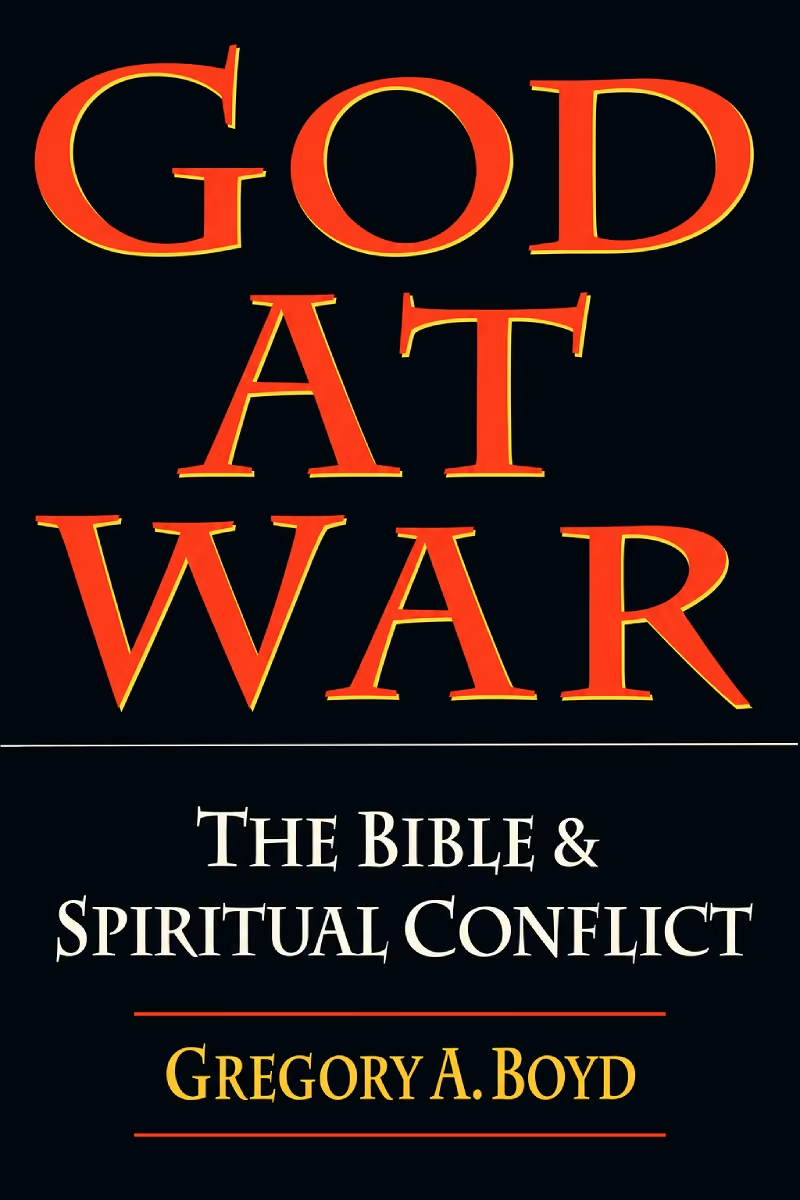
God at War: The Bible and Spiritual Conflict
Why does Scripture describe a world marked by suffering if God is good? Gregory A. Boyd explores the Bible's recurring picture of conflict between God and rebellious spiritual powers, from Old Testament accounts of hostile forces to Jesus' miracles, the cross, and the church's struggle. He shows how this warfare perspective reshapes the problem of evil and the meaning of Christ's victory.
Available Instantly
About This Book
Gregory A. Boyd's God at War: The Bible and Spiritual Conflict offers a sustained biblical-theological account of evil through what the author calls a warfare worldview. Rather than treating all suffering as something God directly wills for a hidden good purpose, Boyd asks how the biblical writers portray a world in which God confronts destructive, rebellious spiritual agents. His central concern is the problem of evil: why terrible things happen in a world created by a good God, how genuine opposition to God's purposes operates, and why Jesus' coming is portrayed as an invasion of enemy-held territory. The work argues that spiritual conflict is not a peripheral doctrine but a recurring feature of the biblical narrative from creation to final restoration.
In his treatment of the Old Testament, Boyd looks beyond explicit references to Satan and surveys biblical depictions of a hostile, disordered creation. Imagery of raging waters, the sea, Rahab, and Leviathan receives sustained attention as part of Scripture's language for forces opposed to God's creative and life-giving reign. Passages in Psalms and Isaiah depicting God's mastery over the sea and mythic sea creatures help frame the restoration of creation as a triumph over chaos. Boyd reads this material in conversation with the ancient Near Eastern environment of the biblical texts, while seeking to identify the distinctive claims Scripture makes about Israel's God.
The book then examines Old Testament portrayals of heavenly beings and conflict in the divine realm. Accounts of God confronting or judging hostile powers, together with the adversary's appearance in Job and other Old Testament texts, contribute to Boyd's account of the activity and origins of Satan. These sections explore how evil spiritual agents can oppose God's will without being independent divine equals. Their importance to the argument is theological as well as descriptive: Boyd contends that acknowledging adversarial agency changes the way believers interpret suffering, disaster, and spiritual opposition. The book does not teach that every misfortune has an identifiable demonic cause, but it seeks to restore a biblical expectation that not everything occurring in the fallen world reflects God's ideal intention.
The New Testament section makes the ministry of Jesus central to the argument. Jesus' announcement of the kingdom of God, his exorcisms, and his healing miracles are read as acts of conflict against the dominion of Satan. The imagery of binding the strong man in Matthew 12:28–29 and its Synoptic parallels illustrates the arrival of a stronger ruler who liberates people from oppression. Boyd considers how miracles and commands over destructive natural forces can be read within this same framework. In the Synoptic Gospels and John, Jesus' teaching about the devil, the kingdom, and the defeat of the ruler of this world supplies the narrative setting for Christ's ministry.
The cross and resurrection represent the decisive victory in that conflict. Boyd develops the Christus Victor understanding of Christ's work: through his death and resurrection Jesus defeats the powers that enslave and destroy. This is not merely a change in how individuals feel about evil but a decisive act within a real struggle between God's kingdom and hostile spiritual forces. The book connects this triumph with New Testament teaching about principalities and powers, including Paul's language in Ephesians and Colossians. Yet the victory is not the same as the immediate disappearance of conflict. The church continues to live amid opposition while anticipating the final removal of evil.
Boyd closes by asking what the warfare framework means for Christian life. Believers are to recognize spiritual opposition, participate in God's work, resist the enemy, and pray and act with confidence that evil is an adversary to be opposed, not something to be passively accepted as good in disguise. For readers troubled by questions such as 'Why does God allow evil?', 'Does God cause suffering?', 'Why did Jesus cast out demons?', and 'What did the cross accomplish against Satan?', the book links the philosophical and pastoral problem of evil to a detailed account of Scripture. Its particular emphasis is a whole-Bible theology of spiritual conflict and divine goodness; it is not an individual-book commentary or merely a practical handbook of warfare techniques.
Book Details

Reading Fit
STUDY LEVEL
Advanced, Intermediate
STUDY SCOPE
Entire Bible, New Testament, Old Testament, Topical
BOOKS INCLUDED

Edition & Format
PUBLISHED
July 18, 2014
AVAILABLE FORMATS
paperback, kindle
LENGTH
410 pages

Topics Covered
You Might Also Like