

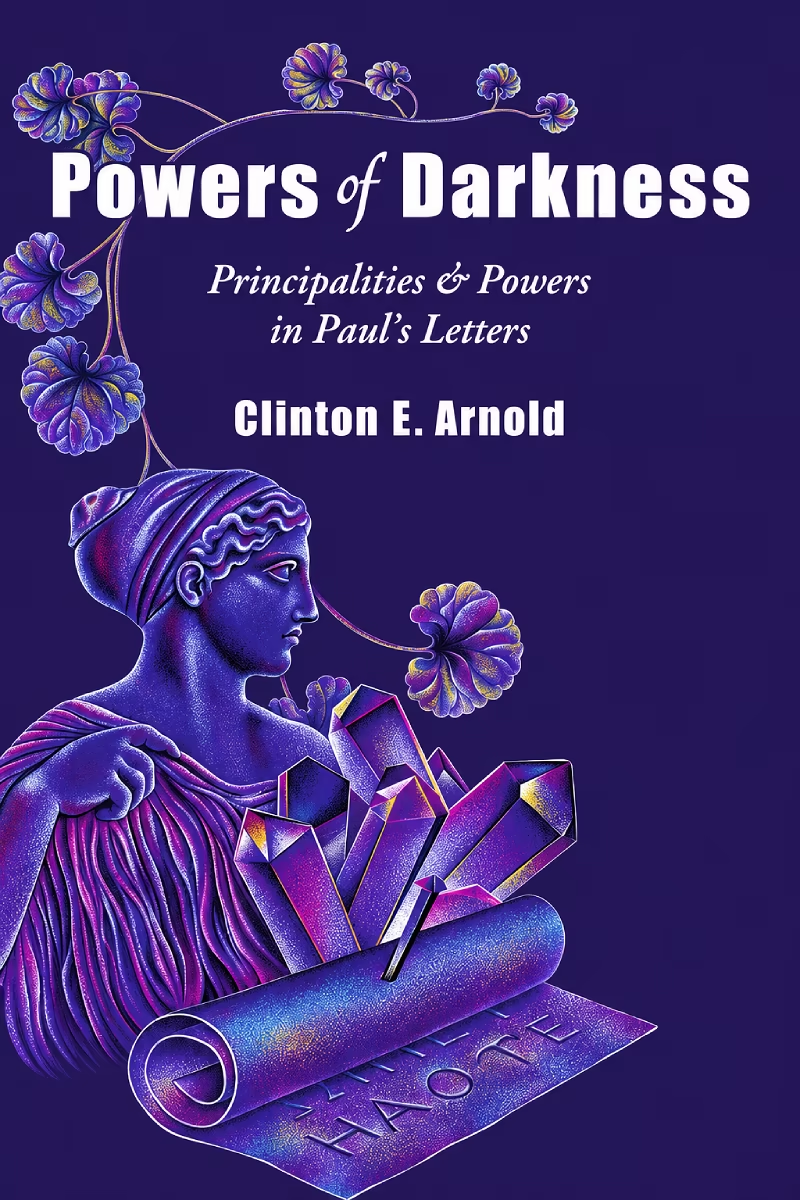
Powers of Darkness: Principalities & Powers in Paul’s Letters
What are the principalities and powers Paul describes, and how should Christians respond to them? Clinton E. Arnold examines these spiritual beings within the religious world of the first century, then traces Christ's victory, believers' new identity, and the ongoing conflict with evil. The result is a biblical explanation of spiritual warfare grounded in Paul's letters rather than speculation.
Available Instantly
About This Book
In Powers of Darkness: Principalities & Powers in Paul's Letters, Clinton E. Arnold investigates what the apostle Paul meant by the rulers, authorities, powers, and spiritual forces named in his writings. The central concern is not simply whether evil exists, but what kind of beings Paul describes, how they affect people, what Christ has accomplished against them, and how Christians should respond. Arnold develops a biblical theology of the principalities and powers while engaging first-century religious beliefs and competing interpretations of Paul's language. His study helps readers understand spiritual warfare within the New Testament's own historical setting rather than reducing it to sensational accounts of supernatural activity or treating the powers only as metaphors for human institutions.
The opening historical investigation examines magic, divination, astrology, popular religious practices, Greco-Roman cults, and Jewish beliefs about supernatural forces. In that environment people sought protection, knowledge, or control through rituals, intermediary beings, and claims of spiritual power. Arnold considers Jesus' teaching and ministry alongside this religious background so that Paul's expressions are heard as his first readers might have heard them. This contextual research does not make the book a general guide to occult practices: its purpose is to clarify Paul's account of personal spiritual powers and the Christian answer to fear of them.
The main exegetical discussion focuses on Paul's letters, especially Ephesians and Colossians. Arnold distinguishes the reality of spiritual beings from proposals that principalities and powers primarily name social, economic, or political structures. He argues that Paul portrays ordered personal agents of the unseen realm, including hostile powers, while also recognizing that their activity can affect human relationships and society. Ephesians 6:10–20 is a major text for Paul's description of the believer's struggle against spiritual forces and for the divine armor by which Christians are called to stand. Ephesians 1:20–23 and 3:10 contribute to the book's account of Christ's exalted authority and the church's place in God's dealings with the heavenly realm.
The decisive turning point is Jesus Christ's victory. In Colossians 2:15 Paul describes Christ's triumph over rulers and authorities through the cross; passages in Colossians 1–2 and Ephesians 1 develop the supremacy of Christ over every competing power. Arnold relates this victory to the new kingdom and new identity of believers who belong to Christ. Christians are not instructed to live as if dark spiritual forces remain ultimate rulers of their lives. The work explains how Christ's saving accomplishment changes their relation to those powers, even while opposition and temptation continue in the present age. Paul's treatment of the present spiritual battle is held together with his expectation that Christ will finally subject every hostile authority to himself, a theme also informed by 1 Corinthians 15:24–28.
Arnold considers the influence of evil powers on believers without suggesting that every difficulty or human failing has a demonic cause. His treatment of spiritual warfare is closely linked to resisting hostile influence, trusting Christ's authority, practicing faith, and living consistently with one's new allegiance. The material in Galatians on enslaving elemental powers and Paul's broader language for spiritual bondage supplies further context for why believers must not return to fear or a system of rival spiritual loyalties. The discussion of Christ alone also addresses the attraction of spiritual intermediaries and attempts to gain security apart from him.
The final section moves from first-century exegesis to interpretation for contemporary life. Arnold asks whether talk of demonic powers describes a real spiritual realm, how such powers may influence individuals and social arrangements, and what practical resistance should look like. Readers looking for biblical answers to questions such as 'What are the principalities and powers?', 'Does Paul teach that demons are personal beings?', 'What happened to the powers at the cross?', and 'How does a Christian stand against evil?' find these questions connected to specific Pauline passages. The book's distinctive contribution is to join careful historical study with an account of Christ's victory and the believer's spiritual security. It is primarily a topical New Testament study of powers in Paul's letters, not a sustained exposition of any one complete biblical book.
Book Details

Reading Fit
STUDY LEVEL
Advanced, Intermediate
STUDY SCOPE
New Testament, Topical
BOOKS INCLUDED

Edition & Format
PUBLISHED
February 3, 1992
AVAILABLE FORMATS
paperback, kindle
LENGTH
244 pages

Topics Covered
You Might Also Like