

In This Article
Recommended Books

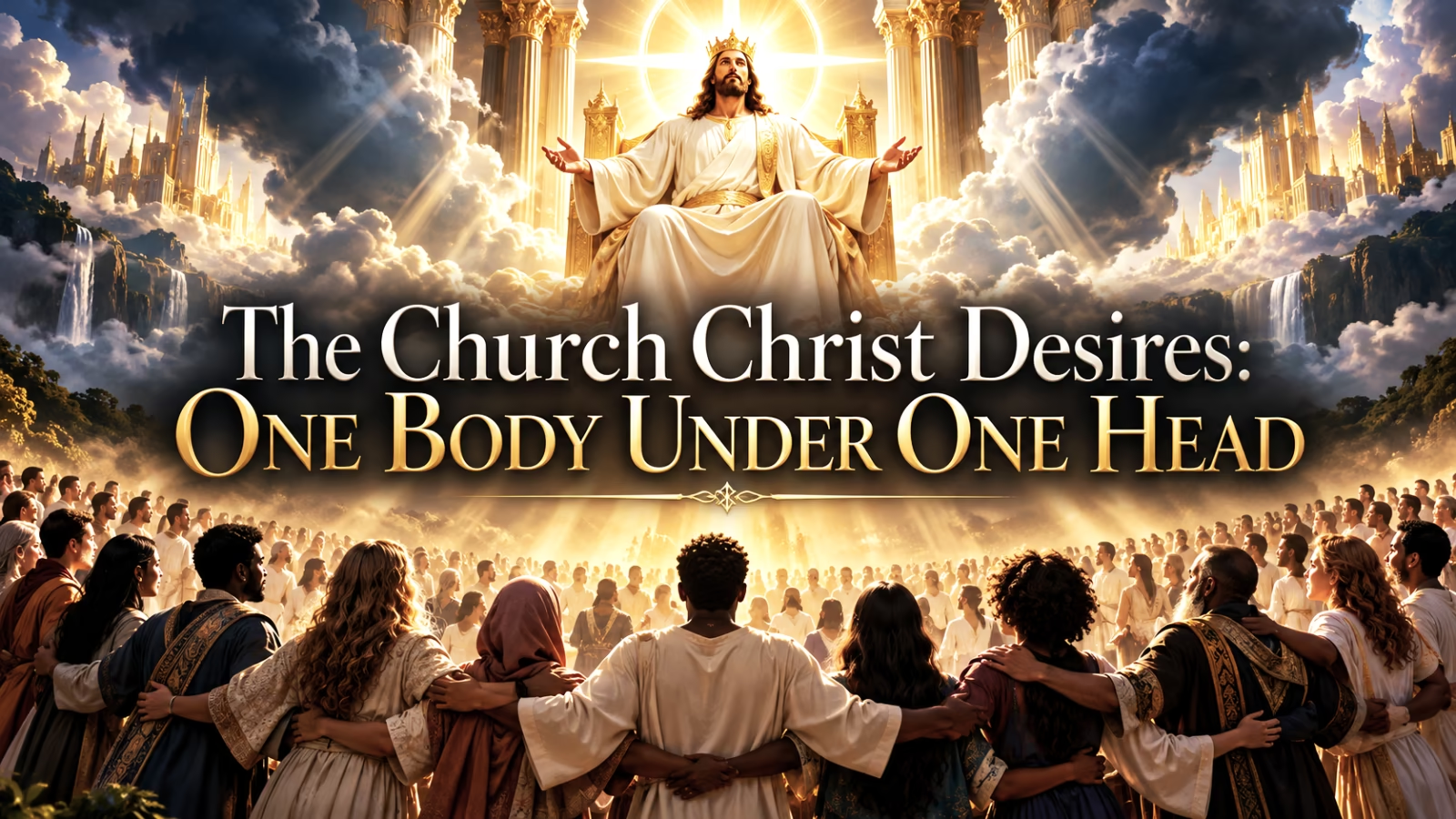
The Church Christ Desires: One Body Under One Head
The New Testament presents a vision of the Church far greater than an institution, denomination, organization, or weekly gathering. The Church is the living Body of Christ, composed of many distinct members whom God Himself has placed together and joined to one living Head.
Paul gives perhaps the clearest picture of this reality in 1 Corinthians 12. The Church becomes healthy in visible expression when its members begin to live according to what God has already made them: one Body, living in one Spirit, under one Head—Jesus Christ.
One Body Because There Is One Head
Paul begins with something much deeper than cooperation among Christians:
“For as the body is one, and hath many members, and all the members of the body, being many, are one body; so also is Christ.”
— 1 Corinthians 12:12, ASV
The striking words are “so also is Christ.” Paul does not merely compare the Church to a body as a useful illustration; he presents the many members joined to Christ as one living reality.
He immediately explains how this happened:
“For in one Spirit were we all baptized into one body, whether Jews or Greeks, whether bond or free; and were all made to drink of one Spirit.”
— 1 Corinthians 12:13, ASV
The Church therefore does not create its unity. There is already one Body and one Spirit, and believers are called to live according to that established reality.
Ephesians 4 develops the same truth. There is one Body, one Spirit, one Lord, one faith, and one God and Father of all; the Church is not made one by organizational agreement but expresses visibly the oneness that already exists in Christ.
That visible expression depends upon the Head. Paul says believers are to grow up in all things into Christ, “who is the head,” and that from Him the whole Body is joined and supplied as each part functions according to its measure (Ephesians 4:15–16).
A healthy Church therefore does not revolve around personalities, institutions, movements, or human authority.
It lives under the government of the Head.
Every Member Has a Place
Paul deliberately uses the human body because no healthy body consists of one functioning member. The foot is not unnecessary because it is not a hand, and the ear does not cease to belong because it is not an eye.
Neither can one member look at another and say, “I have no need of thee.”
God determines the arrangement:
“But now hath God set the members each one of them in the body, even as it pleased him.”
— 1 Corinthians 12:18, ASV
That destroys both inferiority and superiority. No believer should conclude, I have nothing to contribute, and no believer should conclude, I do not need the others.
This also exposes a serious weakness wherever Church life is reduced primarily to a few people ministering while everyone else watches. Paul’s vision is not a congregation of spectators gathered around gifted professionals; it is a living Body in which the members are equipped so that the whole Body functions.
The members do not all perform the same work. Their differences are part of God's design.
Diversity Without Division
Paul does not envision uniformity. The Body contains different members, gifts, functions, measures, and responsibilities, yet all live from the same Head and participate in the same Spirit.
In 1 Corinthians 12, Paul speaks of varieties of gifts but the same Spirit, varieties of ministries but the same Lord, and varieties of workings while God works through them all. The Spirit distributes according to His will, and the manifestation given through each member is for the common good.
That means spiritual gifts were never intended primarily for personal distinction.
Teaching serves the Body. Helps serves the Body. Administration serves the Body. Giving, encouragement, mercy, discernment, and every genuine supply from Christ exist so that the members may build one another up.
Paul gives the governing principle in 1 Corinthians 14:26: everything is to be done unto edifying. Whatever gift a member possesses remains healthy only while it remains under the Head and contributes to the building up of the Body.
Diversity therefore does not threaten unity when every member is receiving direction from the same Head. It becomes beautiful because the differences allow Christ to be expressed through many functions rather than through one member alone.
Christ the Head Present as the Spirit
The Church cannot understand its life properly if Christ the Head is separated in our thinking from the Spirit by whom His members live.
Paul says plainly:
“And he is the head of the body, the church: who is the beginning, the firstborn from the dead; that in all things he might have the preeminence.”
— Colossians 1:18, ASV
Yet Romans 8 speaks of the Spirit of Christ and immediately moves to Christ in you. Paul also declares in 2 Corinthians 3:17 that “the Lord is the Spirit.”
The Head is therefore not absent from His Body while some separate spiritual mechanism directs Christian living. Christ Himself is present and experienced in His members as the Spirit.
This makes Romans 8 intensely practical:
“For they that are after the flesh mind the things of the flesh; but they that are after the Spirit the things of the Spirit.”
— Romans 8:5, ASV
To set the mind upon the Spirit is to set the mind upon the living Head.
Paul then says:
“For as many as are led by the Spirit of God, these are sons of God.”
— Romans 8:14, ASV
To be led by the Spirit is to be led by Christ the Head.
This is not an automatic system of Christian living. The believer does not become passive, lose his will, or cease functioning as a distinct person; he consciously turns toward the Head, sets his mind upon Him, receives from Him, and follows His leading.
Before the cross, the disciples experienced that relationship outwardly. Christ stood before them and said, “Follow me,” and they remained distinct persons who chose to hear, trust, obey, and continue with Him.
After His glorification, the same living Head is present within His members as the Spirit. The relationship is now inward, but its essential character remains: Christ leads, and His members respond.
Joined to the Lord in One Spirit
Union with Christ does not destroy individuality. The believer does not disappear into Christ, nor does the human spirit become annihilated, replaced, or absorbed into passivity.
Paul can speak of the believer being joined to the Lord in one Spirit while also saying:
“The Spirit himself beareth witness with our spirit, that we are children of God.”
— Romans 8:16, ASV
The Spirit remains the Spirit, and our spirit remains our spirit. The union is genuine without destroying the individual member.
This is essential to Paul’s revelation of the Body. A living body requires living members who retain genuine functions, responsibilities, choices, and measures, while all remain joined to and governed by the same Head.
One Body does not mean one personality.
It means many distinct members living under one Head.
Love Is the Life in Which the Body Functions
It is significant that 1 Corinthians 13 stands directly between Paul’s teaching about the members and gifts of the Body in chapters 12 and 14. Without love, extraordinary spiritual activity becomes empty.
A person may possess impressive knowledge, faith, gifts, eloquence, or sacrifice and still fail at the very life in which the Body is meant to function. Rivalry, pride, envy, resentment, self-promotion, and ambition cannot produce the Body-life Paul describes.
Christ commanded:
“A new commandment I give unto you, that ye love one another; even as I have loved you, that ye also love one another.”
— John 13:34, ASV
That love cannot be manufactured by human effort. The answer is not for believers to study Christ from a distance and attempt to imitate His love through greater determination.
Paul tells us where the love comes from:
“the love of God hath been shed abroad in our hearts through the Holy Spirit which was given unto us.”
— Romans 5:5, ASV
Galatians 5 likewise identifies love as fruit of the Spirit.
The love expressed through a healthy Church is therefore not merely love that resembles Christ's. It is the love of Christ Himself finding expression through members who remain under the Head and walk in the Spirit.
This is why Christ could say that the world would recognize His disciples by their love for one another. The Body becomes visible when the life of its Head becomes visible through its members.
No Schism in the Body
Paul states the objective unmistakably:
“that there should be no schism in the body; but that the members should have the same care one for another.”
— 1 Corinthians 12:25, ASV
This does not mean ignoring error or sacrificing truth for agreement. Paul repeatedly confronts false teaching, immorality, disorder, and conduct contrary to Christ.
Biblical unity is never unity at the expense of the Head.
Instead, Paul describes members who understand that they belong to one another because they belong to one Body. When one suffers, the others suffer with him; when one is honored, the others rejoice with him.
There is no legitimate competition in such a Body. Another believer’s usefulness does not threaten us, another member’s honor does not diminish us, and another member’s suffering cannot simply be dismissed as someone else’s problem.
The Church does not produce this oneness through better cooperation. God has already established one Body and one Spirit; the responsibility of the saints is to express visibly what God has already made true.
Christ Alone Has the Preeminence
A healthy Church cannot exist where the Head has been displaced.
Colossians 1:18 says that Christ is the Head so that “in all things he might have the preeminence.” The Church therefore does not belong to a pastor, teacher, denomination, ministry, movement, or tradition, regardless of how useful any of them may be.
Paul confronted this directly at Corinth. Some were saying they belonged to Paul and others to Apollos, but Paul reduced both men to their proper place: they were servants through whom the Corinthians believed (1 Corinthians 3:4–5).
Paul planted. Apollos watered. God gave the increase.
Healthy believers can appreciate those who serve without gathering themselves around them as though the servants were the Head. Every genuine ministry must ultimately turn the members toward Christ rather than produce dependence upon itself.
The Church has only one Head.
Abiding in Christ Produces the Life of the Church
Christ Himself described the source of spiritual fruit:
“Abide in me, and I in you. As the branch cannot bear fruit of itself, except it abide in the vine; so neither can ye, except ye abide in me.”
— John 15:4, ASV
The branch does not become fruitful by studying the appearance of fruitful branches and attempting to reproduce them. Its fruit comes from the life it receives from the vine.
Christ continues:
“I am the vine, ye are the branches: He that abideth in me, and I in him, the same beareth much fruit: for apart from me ye can do nothing.”
— John 15:5, ASV
The Church therefore cannot be restored or perfected merely by creating better structures. Prayer, worship, fellowship, ministry, teaching, service, holiness, witness, and love become living realities only as the members remain practically joined to the Head and receive His life.
The answer to spiritual deadness is not greater human activity.
It is life from the Head.
Growing Into Maturity and Holiness
Paul’s vision is not simply that believers gather together, but that the Body grows. Ephesians 4 shows gifted ministries equipping the saints for the work of ministry so that the Body itself is built up toward maturity.
The objective is not permanent dependence upon a few gifted people. The ministries serve the Body so that the members themselves become able to function according to the measure supplied by Christ.
This growth joins truth and love. Paul says we are to speak truth in love and grow “in all things into him, who is the head, even Christ” (Ephesians 4:15, ASV).
Holiness follows the same principle. Believers are called to put away bitterness, wrath, malice, corrupt speech, immorality, greed, falsehood, and the works of the flesh, while kindness, forgiveness, purity, humility, patience, faithfulness, self-control, and love increasingly appear.
Yet holiness is not human beings successfully imitating Christ through self-effort. As members set their minds upon the Spirit, remain responsive to the Head, and obey His leading, the holy life of Christ gains expression through His Body.
Human responsibility remains real. The member chooses to yield, follow, resist sin, forgive, serve, speak truth, and walk obediently, but the life being expressed is not self-generated righteousness.
It is Christ living through His members.
The Church as Christ Desires
The New Testament vision is clear: many members, yet one Body; different functions, yet one Spirit; distinct persons, yet one living Head.
Every member has value and every member has a place. Gifts build the Body rather than elevate individuals, ministries equip the saints rather than replace them, love flows from Christ rather than human imitation, and holiness becomes the expression of the life of the Head.
Christ has the preeminence.
The Church therefore reaches healthy expression as its members remain joined to Him, set their minds upon the Spirit, receive His supply, love with His love, serve according to their measure, and grow together into Him who is the Head.
This is not primarily a blueprint for a better religious institution. It is the revelation of a living organism whose life, direction, love, holiness, growth, and unity come from Christ.
That is the Church as Christ desires it to be seen: one Body, living in one Spirit, under one glorious Head.
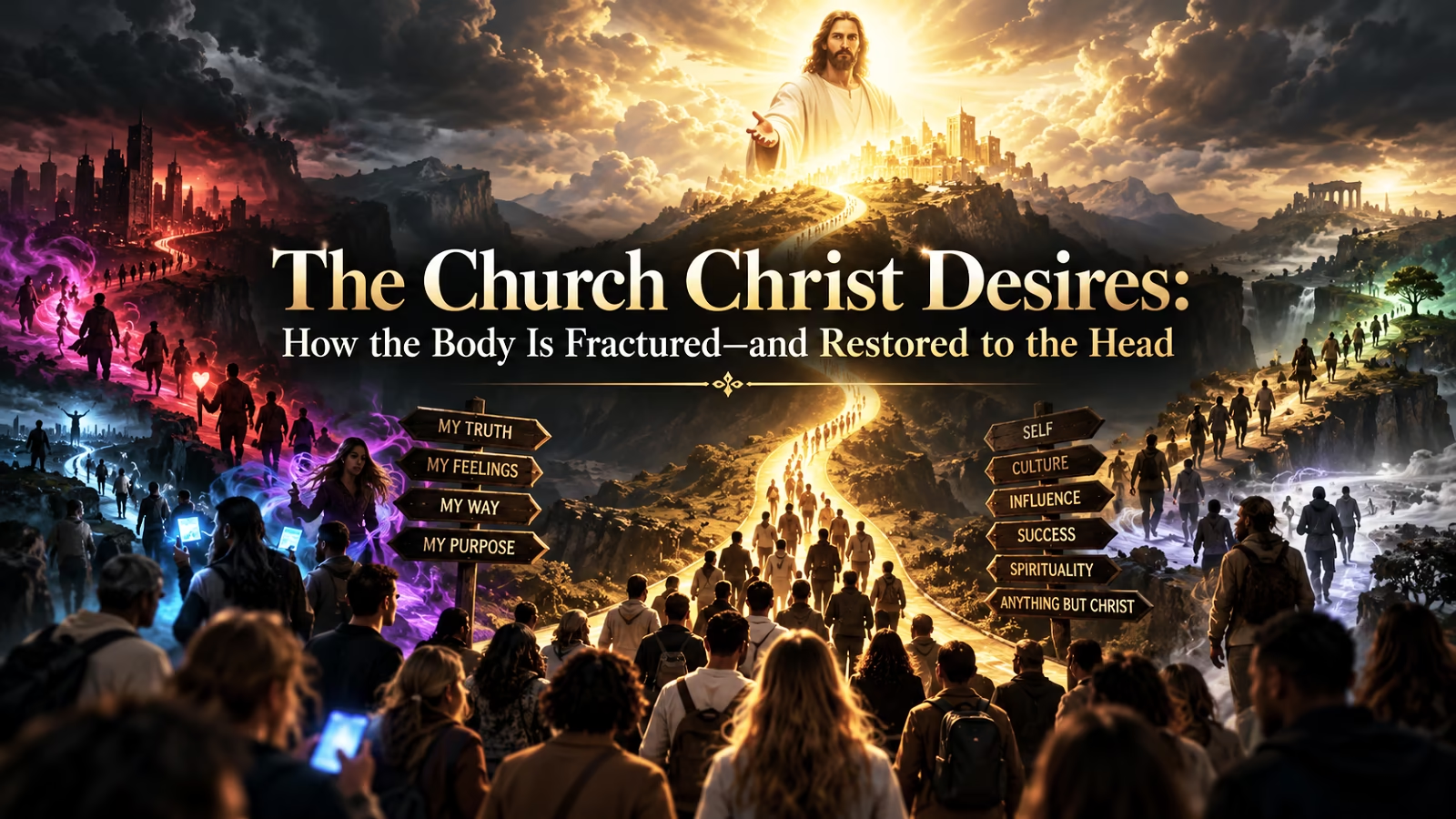
Yet that raises a necessary question. If the Body is already one and Christ is its living Head, what happens when its members cease living consciously under His government?
Read Part 2: The Church Christ Desires: How the Body is Fractured-and Restored to the Head